Irish Pub NYC: Where Traditional Vibes Meet Modern Manhattan
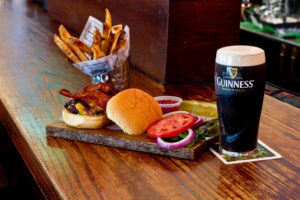

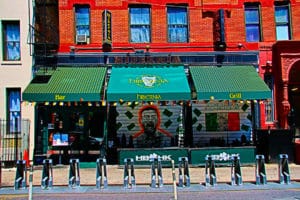
There is a particular kind of room New York does better than almost anywhere else, the kind that feels both rooted and improvised, polished yet worn in, lively without trying too hard. A good Irish pub sits squarely in that category. It carries old-world cues, dark wood, mirrored back bars, the low amber glow that flatters everyone after six o’clock, and then places them in the middle of one of the fastest, sharpest cities on earth. That tension is exactly why the format works so well here. An Irish Pub NYC regular will tell you that the draw is not nostalgia alone. It is the feeling of continuity, of stepping into a place that remembers how to slow a day down without becoming stale or theatrical.
Manhattan, in particular, has always rewarded establishments that understand rhythm. The lunch crowd wants speed and comfort. The after-work crowd wants release without chaos. Visitors want something legible and unmistakably New York, but also warmer than a cocktail lounge where everyone seems to be waiting to be noticed. The best Irish pubs manage all three. They offer stout pulled with care, bartenders who know when to chat and when to move, and food that exceeds the bare minimum expected of pub fare. Some lean deeply traditional. Others borrow from gastropubs, neighborhood taverns, and modern sports bars. The strongest among them know how to blend those influences without losing their center.
The New York version of the Irish pub
To understand why the Irish pub remains one of the city’s most resilient hospitality models, it helps to separate the real thing from the cartoon. The stereotype is easy enough to picture, shamrocks in every window, blaring music, décor imported as shorthand. That version exists, particularly in heavily trafficked areas, but it is not what keeps locals coming back. The New York version that endures tends to be subtler. It values atmosphere over costume.
At its best, an Irish Pub NYC venue creates social ease. That may sound abstract, but anyone who has spent time in the business knows how hard it is to achieve. A room can be beautiful and still feel uncomfortable. Service can be technically efficient and still leave people cold. A pub succeeds when the barriers drop. Solo guests feel fine taking a stool at the bar. Small groups can hear each other without shouting. A couple can split a pie and stay longer than planned. Office workers can loosen their ties, order a round, and become human again.
That social ease is not accidental. It comes from dozens of practical decisions. Lighting is kept warm rather than bright. The bar is given enough prominence to anchor the room. Seating usually balances high-tops, booths, and plain old stools. Menus are broad enough to suit mixed groups, with fish and chips, burgers, shepherd’s pie, maybe a curry, a few salads that do not feel punitive, and pints priced within the realm of reason for Manhattan. Even the soundtrack matters. A good room can absorb a Premier League crowd at noon, a dinner rush at seven, and a late-night second wave without feeling like three different businesses stitched together.
Why tradition still matters
For all the adaptation, the Irish pub remains one of the last places where hospitality can still feel direct and unprogrammed. That matters in a city increasingly shaped by reservation windows, timed seatings, QR codes, and venues designed as much for photos as for repeat business. Traditional pub values push against that current.
The first of those values is continuity. Regulars matter. Staff longevity matters. The sense that the room has a memory matters. I have seen plenty of bars with superior build-outs and flashier openings fail because they treated each service like a reset. A pub gains strength over time. Bartenders remember names, then orders, then the shape of people’s weeks. Someone comes in every Thursday after a late shift. Another guest always wants a half-pour before committing to a full pint. A neighborhood teacher celebrates the last day of term with a Jameson and ginger. These details are small, but small details are where loyalty is built.
The second value is proportion. Irish pubs have historically understood that not every outing needs to become an event. That is a lesson New York sometimes forgets. There is room in the market for spectacle, but daily life depends on places that can support ordinary pleasures. A plate of bangers and mash on a cold evening. A quiet corner for two old friends catching up. An unhurried Sunday pint while the rain smears the windows. In Manhattan, where costs are high and pressure is constant, there is genuine luxury in a place that asks less of you.
The third value is welcome. In operational terms, welcome means more than friendliness. It means the host stand does not act like a velvet rope. It means a bartender can make a newcomer feel at home within ninety seconds. It means sports fans, families, tourists, and neighborhood lifers can occupy the same room without obvious friction. That balancing act is harder in New York than in smaller cities because density sharpens every edge. Yet when it works, the result is unusually democratic.
Manhattan changes the formula
No pub in Manhattan exists in a vacuum. Rent is too high, labor is too expensive, and guest expectations are too varied for that. The city shapes the model in visible ways.
For one thing, food quality has risen substantially. Twenty years ago, many pubs could get by on frozen appetizers and a few dependable mains. Today, the competition is simply too strong. Diners know the difference between a reheated shepherd’s pie and one made with care. They can tell when a soda bread is there because someone thought about the menu, not because it checked a box. Even the humble burger, now judged against dozens of excellent examples citywide, has to hold its own.
That pressure has improved the category. Many Irish pubs in Manhattan now run kitchens that are more serious than outsiders expect. Brunch has become a major revenue stream. Weekend service often includes eggs, smoked salmon, Irish breakfast plates, and coffee programs better than what old pub stereotypes would suggest. Some operators have sensibly broadened the menu to include seasonal soups, strong sandwiches, and vegetarian dishes that do not feel like afterthoughts. That is not a betrayal of tradition. It is an acknowledgment that modern hospitality has to meet people where they are.
Drinks have changed too. Guinness remains central, and rightly so, but the back bar has expanded. Guests now expect a thoughtful whiskey selection, competent cocktails, local beers on draft, and at least one or two options for those avoiding alcohol. The strongest pubs approach this without becoming fussy. There is skill in offering range while preserving clarity. Nobody wants to open a menu in an Irish pub and discover a dissertation. A concise drinks list with a few excellent choices usually beats an encyclopedic one.
Then there is design. Manhattan rewards venues that look cared for, but not overstyled. The successful Irish pubs tend to walk a narrow line. They preserve tactile richness, polished wood, brass rails, framed vintage mirrors, etched glass, tile floors, snug booths, then fold in modern comforts with restraint. Better acoustics. Cleaner sightlines. Improved kitchen ventilation. Bathrooms people do not dread visiting. Subtle upgrades matter more than gimmicks. Guests may not consciously register all of it, but they feel the difference.
The neighborhoods shape the mood
An Irish Pub NYC experience is never identical from one neighborhood to another. Midtown, the Financial District, Chelsea, the Upper East Side, Hell’s Kitchen, and the Village each impose their own tempo.
Midtown pubs are often asked to do the impossible. They serve office workers, theatergoers, conventioneers, sports fans, and international tourists, sometimes all in the same afternoon. The weaker places flatten under that pressure and become generic. The better ones learn to flex. They speed up lunch service, keep pours consistent when the post-work wave hits, and still manage to feel grounded once the pre-show crowd clears out. In those rooms, the bar staff often work with astonishing precision. You can tell when a pub has survived Midtown for years. It has learned how to move.
Downtown, especially around the Financial District, there is a stronger weekday pulse. These pubs rise and fall with office patterns, but many have adapted by leaning into weekends, private events, and a more polished food offering. Some now feel like hybrids, part neighborhood refuge, part business hospitality machine. When done well, the blend suits the area. When done poorly, it reads as identity confusion.
Uptown pubs tend to enjoy a steadier neighborhood relationship. There is often more room for routine, more chance of seeing the same faces through the week, and a touch less performance in the atmosphere. That does not mean they are sleepy. It means they can afford to be more assured. A pub with genuine local roots tends to show them most clearly in these areas, where the bar can function as an extension of the block rather than a staging ground for passing trade.
What separates a good pub from a forgettable one
People often talk about ambience as if it floats above operations. It does not. Ambience is operational excellence made visible, or sometimes invisible. The details that separate a memorable Irish pub from a forgettable one are usually practical.
A well-kept draft system is near the top of the list. Beer can be served cold, clean, and with correct glassware, or it can be handled casually and lose half its appeal. Guinness, especially, exposes whether a pub respects fundamentals. Guests may not know the mechanics of line cleaning or gas balance, but they know when a pint tastes right.
Service style matters just as much. In a pub, the sweet spot is attentive without intrusion. There is a difference between friendly and overfamiliar. A seasoned bartender can read the room quickly. Tourists may want recommendations and a bit of local color. A pair on a date may want discreet efficiency. A regular perched at the end of the bar might appreciate a joke, but only after the rush passes. This kind of judgment cannot be faked with scripting. It comes from experience and from management that hires for temperament, not just speed.
Food timing is another silent test. Pubs often do brisk volume, especially before games, after work, or late on weekends. Kitchens that hold up under pressure become neighborhood institutions. Kitchens that slide into long ticket times or inconsistent plating eventually lose their edge, even if the room itself remains charming. Guests forgive a lot in a pub, but they do not forgive feeling trapped in disorganization.
One of the clearest signs of quality is how a place handles its quieter hours. Peak time can conceal many weaknesses. Visit at three in the afternoon, on a wet Tuesday, and the truth is easier to see. Is the room still inviting? Are the bathrooms clean? Does the music still fit? Does the bartender treat one guest with the same respect as a packed rail six hours later? Strong pubs are consistent when nobody is watching.
The food has become part of the story
There was a time when pub food in Manhattan was expected to be merely adequate. That standard has passed, and for the better. Today, many guests pick their pub partly on kitchen reputation. They may come for the pint, but they stay because the meal is genuinely satisfying.
Classic dishes still carry weight because they fit the room. Shepherd’s pie remains one of the most sensible cold-weather orders in the city, especially when it arrives with a browned potato top and filling that tastes of stock rather than salt. Fish and chips may be the most revealing item on the menu because there is nowhere to hide. Batter has to stay crisp. Fish has to remain moist. Chips should feel deliberate, not dumped from a freezer bag and forgotten. An Irish breakfast can be a weekend draw all by itself when done properly, though it also exposes sourcing issues quickly. Quality sausages and rashers are not always easy to replicate perfectly here, so the better kitchens build a version that honors the original without pretending to be a carbon copy.
There is also room for adaptation. New York diners expect options, and good pubs have learned to broaden their range without erasing their identity. I have seen Irish-inspired seafood chowders that made perfect sense in winter, steak sandwiches that outperformed trendier bistro versions, and soda bread paired with cultured butter that felt like a minor event. This is where Manhattan’s influence is strongest. The city encourages improvement. If a pub can deliver comfort and craft in the same dish, it earns a loyalty that décor alone never will.
Sport, music, and the shared room
Part of the pub’s enduring appeal lies in its ability to host collective attention. In New York, that matters more than ever. So much of city life is fragmented. People commute alone, work in silos, order dinner from apps, and consume entertainment through headphones. A pub restores the shared room.
Sport plays an obvious role. Soccer mornings in Manhattan have become a fixture, and Irish pubs are often at the center of that culture. Doors open early. Scarves go up. The room fills with supporters who may have little else in common except a club allegiance and a readiness for breakfast pints before noon. American football Saturdays and Sundays bring a different energy, louder, broader, more sprawling. A flexible pub can accommodate both without alienating either crowd.
Music matters too, though not every pub needs a session to feel authentic. Live Irish music can be wonderful when it fits the room and the scale is right. A trio in a back space, a fiddle and bodhrán on a winter evening, a singer who knows when to let the room breathe, that can elevate a pub from pleasant to unforgettable. But music deployed as a blunt instrument often flattens the atmosphere. The point is not to force heritage. It is to create a sense of occasion.
Shared rituals, even modest ones, help define the best houses. A bartender ringing a bell for last call. The familiar rise and fall of a packed room singing along to a song everyone somehow knows. The annual crush around St. Patrick’s Day, followed by the quieter, more meaningful weeks when the neighborhood comes back and the pub feels like itself again. These moments are part of the emotional architecture.
What visitors should look for
For someone trying to find a worthwhile Irish Pub NYC stop in Manhattan, the smartest approach is to read the room rather than chase branding. Exterior charm can mislead. So can online reviews written during unusually busy nights or tourist-heavy weekends.
A few clues tend to be reliable. Look at the bar before the dining room. Is it occupied by people who seem comfortable, not just passing through? Notice the tap handles and the glassware. A place that respects its beer usually respects other basics as well. Scan the menu for confidence. A concise pub menu with well-chosen staples often signals more care than a bloated one trying to please every imaginable customer. If you can, visit outside peak hours once before committing to it as a regular haunt. Quiet reveals character.
For those deciding where to bring colleagues, friends from out of town, or family members with different tastes, a pub is often the safest high-value choice in Manhattan. It strikes a rare balance between flexibility and personality. Not every guest wants a tasting menu or a noisy rooftop. Most people, however, respond well to a warm room, a proper pour, and food they actually want to eat.
Why the format endures
Hospitality trends rise quickly in New York and disappear even faster. Themes burn hot and fade. Design fashions date themselves. Beverage crazes peak, splinter, and get replaced. The Irish pub endures because it answers permanent needs rather than temporary appetites.
People want places where they can return without explanation. They want rooms that offer mood without pressure. They want service that feels personal but not performative. They want food that comforts and drinks that satisfy. They want somewhere to meet after work, somewhere to watch a match, somewhere to duck into when the weather turns, somewhere to celebrate a promotion without turning the night into a production. In a city of relentless reinvention, the pub’s durability feels almost radical.
That does not mean every Irish pub is automatically good, or that tradition alone guarantees relevance. The category survives because the best operators evolve carefully. They improve kitchens, refine beverage programs, train staff well, maintain their spaces, and adapt to the economic realities of Manhattan. Yet they do all that without severing the thread that makes a pub a pub.
That thread is hard to define in a single phrase, but easy to recognize in person. It is the sense that a room can hold history and still feel alive. It is the confidence to remain welcoming in a city that often mistakes exclusivity for quality. It is the sound of glassware, conversation, and music settling into a rhythm older than the block outside, yet entirely at home on that block. That is where traditional vibes https://danteartv179.zenbloomer.com/posts/what-makes-an-irish-pub-nyc-experience-so-memorable meet modern Manhattan, and why the Irish pub remains one of New York’s most dependable pleasures.
Hibernia Bar
401 W 50th St
New York, NY 10019, United States
Phone: +1 212-969-9703
FAQ About Irish Pub NYC
What is the best Irish pub in NYC?
The best choice depends on your location and preferred atmosphere. Hibernia Bar is a neighborhood Irish pub in Hell's Kitchen offering Guinness, Irish whiskey, pub food, and sports viewing.
Where do Irish people go in NYC?
New York's Irish community gathers in many neighborhoods and venues. Hibernia Bar welcomes Irish expats, local residents, and visitors at 401 W 50th St, just off Ninth Avenue.
Where can I watch GAA games in New York?
Hibernia Bar lists GAA among the sports it shows. Call +1 212-969-9703 to confirm coverage and opening times for a particular match before visiting.
What is the difference between a bar and a sports bar?
A sports bar emphasizes televised games and a shared viewing atmosphere. Hibernia combines sports viewing with the food, drinks, and hospitality of a neighborhood Irish pub.