The Allure of a Traditional Irish Pub in NYC
New York has never lacked for places to drink. The city offers rooftop cocktails with skyline views, dimly lit wine bars in brownstone basements, hotel lounges built for expense accounts, and neighborhood taverns that still run on cash and habit. Yet for all that variety, the traditional Irish pub keeps a particular hold on the city. It is not simply a place to order a pint. At its best, it is one of the last urban rooms where warmth is part of the architecture, conversation matters more than spectacle, and regulars shape the mood as much as the staff does.
That is the real appeal of an Irish Pub NYC drinkers return to again and again. It has less to do with novelty than with atmosphere, and less to do with trend than with trust. A good Irish pub does not need to announce itself. You feel it the moment you step inside. The light is low but not gloomy. Wood softens the room. The bar looks built to last, not assembled for a season. There is usually a sense that many nights have unfolded here in exactly the way they should have, over pints, plates, football talk, family stories, and the kind of easy silence that only happens in a place where nobody is trying too hard.
What “traditional” really means in New York
The word traditional gets thrown around carelessly in hospitality. In practice, it should mean more than a dark room and a few framed pictures. In New York, where bars are often designed with a theme first and a soul second, a traditional Irish pub stands out because it feels lived in. The room may be polished, but it does not feel polished for Instagram. There is usually a backstory, whether the pub is family-owned, has served the neighborhood for decades, or was built with a close eye on the details that define pubs in Dublin, Cork, Galway, or the smaller towns that shaped the Irish public house tradition.
That tradition depends on balance. A pub should be welcoming without becoming chaotic, lively without becoming loud for the sake of it, and comfortable enough that one pint can turn into three hours. The best operators understand that design alone cannot create this. You can import stained glass, brass foot rails, and carved woodwork, but if the staff rushes people through Irish Pub NYC drinks or the music overwhelms the room, the illusion breaks immediately.
In New York, authenticity also has its own local flavor. A traditional Irish pub here is rarely a museum piece. It exists in a city that moves fast, serves every kind of customer, and demands flexibility. Office workers stop in at 5:30. Tourists drift through at 7. Late diners arrive Irish pub menu NYC after a show. Old neighborhood regulars claim their usual stools as if the years never changed. The best pubs absorb all of that without losing their center.
The room itself does half the work
Most people underestimate how much the physical room shapes the pub experience. In a strong Irish pub, the bar is not a backdrop. It is the engine. The sightlines matter. So does the spacing between stools. There is a practical intelligence to the layout, built around conversation and movement rather than pure volume. You can usually read the room at a glance. Someone is settling a tab with the bartender. A pair of friends is deep into a second round. A few people are eating at the edge of the bar. Nobody seems hurried, even when the place is full.
Wood plays a major role in that effect. Dark timber, paneled walls, built-in shelves, and a solid bar top make a room feel grounded. Brass, etched mirrors, old photographs, and snug booths add texture, but they only work if they seem to belong there. When every decorative touch looks newly distressed, the pub starts to feel like a set. The better places know restraint. They leave room for wear, memory, and the small imperfections that make a room credible.
Lighting may be the most important detail of all. Too bright and the room feels exposed. Too dim and it turns murky. A good pub finds the middle ground where faces look warm, the beer catches the light, and the evening can unfold without glare. It is one reason people linger. The environment gently slows them down.
Why New Yorkers keep seeking out Irish pubs
Part of the answer is practical. Irish pubs are often among the most reliable places in the city. They tend to open early, close late, pour a proper draft, and offer food that satisfies without pretense. If you need a meeting point, an Irish pub works. If you need somewhere to watch a match, have dinner before a concert, or pass an hour alone with a newspaper and a pint, it works for that too.
But reliability is only part of the story. The deeper appeal is emotional. New York is crowded, expensive, and often transactional. Many public spaces are built around speed. An Irish pub offers a different tempo. It asks for presence. You take a seat. You order. You look around. You let the room reveal itself. Even the best service in a pub has a certain rhythm to it. Attentive, yes, but rarely intrusive. The drink arrives, then a little space opens around you.
That quality matters more than people sometimes admit. City life can make leisure feel scheduled and managed. A proper pub still allows for accident. You run into an old coworker. You hear a story from the bartender about a snowstorm fifteen years ago. You stay for shepherd’s pie because the room has settled around you in the right way. Some of the most memorable nights in New York begin with no larger plan than, “Let’s meet at the pub and see.”
The bar staff set the standard
A traditional Irish pub can survive a slightly tired banquette or a short food menu. It cannot survive indifferent service. In pubs with real staying power, the bartenders and servers understand that hospitality is not performance. It is composure, memory, timing, and judgment.
The memory part often goes unnoticed until you see it in action. A bartender who remembers what someone drinks, how fast they drink it, whether they are in the mood to talk, and when they would rather be left alone is doing a level of work that no cocktail theater can replace. In a busy New York room, that sort of attentiveness creates loyalty.
Judgment matters just as much. The best pub staff know how to keep energy up without letting the room tip into disorder. They can read when a group needs another round quickly, when a solo guest would appreciate a chat, and when a table has had enough. This is old-school floor management, and it is still one of the hardest skills in the business.
I have seen beautifully designed bars fail because they hired for looks and speed instead of steadiness. By contrast, modest pubs with excellent staff often build a following that lasts decades. People return to places where they feel known, or at least capably looked after.
The pint still matters
For all the romance around pub culture, the basics have to be right. The beer must be well kept. This sounds obvious, yet many bars in New York still mishandle draft lines, glassware, or pour technique. In a traditional Irish pub, these details are not extras. They are the foundation.
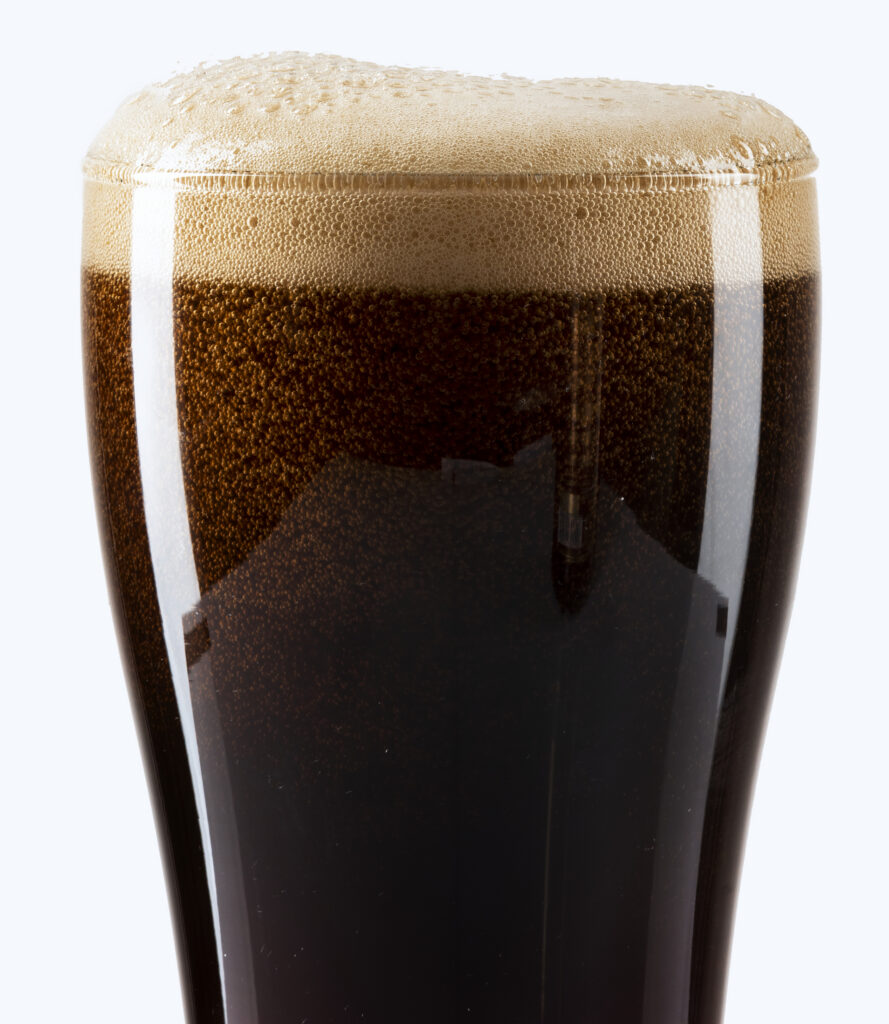
A proper pint arrives with care. The temperature should be cool, not icy. The head should look intentional, not accidental. The glass should be clean, free of the little bubbles that cling when residue has been left behind. None of this is mysterious, but it requires discipline.
Guinness, of course, remains a benchmark. It is also a trap for pubs that think the logo alone is enough. New Yorkers know the difference between a tired pint and a good one, even if they cannot always explain it technically. A well-poured Guinness has texture and balance. It looks beautiful because it has been handled properly, not because someone staged it for effect.
That said, a traditional Irish pub in NYC should not live or die by one tap line. Good lagers, stouts, ales, cider, and a sensible whiskey selection all play a part. The point is not endless choice. It is confidence in what is offered. A concise, well-maintained program nearly always beats a sprawling list with weak execution.
Food is not secondary
One of the easiest ways to tell whether a pub takes itself seriously is to order dinner. In weaker places, the kitchen exists to soak up alcohol. In better ones, the food is central to the pub’s identity. It may not be elaborate, but it should be honest, hot, and satisfying.
Irish pub food in New York has evolved over the years. The old staples still matter: fish and chips, shepherd’s pie, bangers and mash, stew, soda bread, and a burger that knows its job. But many of the strongest pubs now bring a broader level of kitchen skill to the menu. The fish arrives crisp instead of greasy. Mashed potatoes taste like potatoes. Brown gravy has depth. Soups are made with care rather than poured from a bag. Portions are generous without being punishing.
Brunch, too, has become part of the equation in many neighborhoods. That can be a mixed blessing. Some pubs adapt well and serve a room full of families, couples, and sports fans with surprising grace. Others dilute their identity chasing daytime traffic. The best maintain continuity. You can order eggs at noon and still feel like you are in a pub, not a generic brunch operation wearing a Celtic accent.
Music, sport, and noise, getting the balance right
Traditional Irish pubs often rely on a combination of music and sports to animate the room, but this is where many places get the balance wrong. A pub is not a sports bar just because there is a television over the shelves. Nor should live music turn every evening into a shouting match.
When done well, live music can transform a room. A few musicians in the corner, playing traditional tunes or well-chosen standards, can lift the atmosphere without dominating it. The key is scale. In a pub, music should gather people in, not force them out of conversation. The same goes for playlists. Good background music supports the mood. Bad background music colonizes it.
Sports present a similar challenge. An Irish pub in New York often serves many loyalties at once, from Premier League mornings to Gaelic games, rugby, baseball, and local teams. The best houses manage this gracefully. They know when the match should become the focus and when the screens should retreat into the background. On a major game day, noise is part of the fun. On an ordinary weekday evening, a room should still allow actual talk.
The neighborhood pub versus the destination pub
Not every great Irish pub serves the same purpose. Some are neighborhood anchors. Others draw people from across the city. Both models can work, though each comes with trade-offs.
A neighborhood pub has intimacy on its side. The staff know the local faces. The room develops habits. Weeknights matter as much as weekends. There is often a subtle social code that regulars understand without discussing. Newcomers are welcome, but the place clearly belongs to the people who keep returning.
A destination pub, by contrast, often trades on history, scale, location, or reputation. It may sit near Midtown offices, the theater district, or a major transit hub. It might be larger, busier, and more varied in its crowd. These pubs need operational precision. They cannot rely on familiarity alone. Their challenge is to maintain character under pressure, especially when heavy foot traffic can flatten hospitality into throughput.
The strongest Irish Pub NYC spots often find a way to do a bit of both. They become well known without becoming anonymous. Tourists feel they have found something real. Locals feel the place is still theirs.
What to look for if you want the real thing
If someone asks me how to judge an Irish pub quickly, I usually suggest paying attention to a few telling details. They reveal more than branding ever will.
- Watch the bar for five minutes before ordering. If the staff move with calm and know who is next, that is a good sign.
- Look at the draft pours. Careless beer handling usually points to broader standards slipping elsewhere.
- Notice the sound level. A proper pub can be lively and still let two people speak in normal voices.
- Read the room at mixed hours if you can. A place that feels right at 4 p.m. And 9 p.m. Usually has substance.
- Order one simple food item. Soup, chips, or a sandwich will tell you a lot about the kitchen’s discipline.
None of these guarantees perfection. But together they offer a practical test, one based on operations rather than mythology.
Why the Irish pub endures even as the city changes
New York hospitality is full of cycles. Concepts flare up and fade. Neighborhoods rise, soften, and reinvent themselves. Rent pressures force hard decisions. Labor costs climb. Consumer habits change. Through all that, the traditional Irish pub has shown unusual resilience.
Some of that resilience comes from breadth. A pub can serve lunch, dinner, drinks, private events, game-day crowds, and after-work regulars without seeming scattered. Few formats are that flexible. Some of it comes from emotional durability. People may chase novelty occasionally, but they build routines around places that make them feel at ease.
There is also an intergenerational quality to Irish pubs that many trend-driven venues cannot match. Parents bring grown children. Former residents return years later and find the room reassuringly familiar. New arrivals to the city discover a pub and use it as a first foothold in an unfamiliar neighborhood. That kind of continuity is rare, and in a city as restless as New York, it is especially valuable.
Of course, not every pub survives, and not every old pub deserves to. Nostalgia can become complacency. Menus get stale. Maintenance gets deferred. Staff culture slips. The places that last are not frozen in amber. They adapt carefully, preserving the parts that matter while improving the parts that need work. Better food, smarter reservation systems, cleaner draft programs, more inclusive service, these are not betrayals of tradition. They are signs that tradition is still alive.
A room that offers more than a drink
What draws people back to a traditional Irish pub in NYC is difficult to fake because it is built from ordinary things done exceptionally well. A steady pour. A warm greeting. A room that flatters conversation. Food that comforts rather than merely fills. Music that adds lift without taking over. A sense that the evening can unfold naturally, without pressure to optimize every minute.
That may sound simple. It is not. Simplicity in hospitality is usually the result of discipline, memory, and taste. It takes work to create a place where people can forget the work. The best Irish pubs manage exactly that. They absorb the noise of the city and return something steadier in exchange.
For New Yorkers, and for anyone trying to understand the city through its gathering places, this is the lasting charm of the Irish pub. It is social without being flashy, traditional without being stiff, and rooted without becoming closed off. You walk in out of curiosity and leave with a feeling that is harder to define than any menu item or decor choice. The room has made space for you. In a city where space is always contested, that remains a rare and powerful gift.
Hibernia Bar
401 W 50th St
New York, NY 10019, United States
Phone: +1 212-969-9703
FAQ About Irish Pub NYC
What is the best Irish pub in NYC?
The best choice depends on your location and preferred atmosphere. Hibernia Bar is a neighborhood Irish pub in Hell's Kitchen offering Guinness, Irish whiskey, pub food, and sports viewing.
Where do Irish people go in NYC?
New York's Irish community gathers in many neighborhoods and venues. Hibernia Bar welcomes Irish expats, local residents, and visitors at 401 W 50th St, just off Ninth Avenue.
Where can I watch GAA games in New York?
Hibernia Bar lists GAA among the sports it shows. Call +1 212-969-9703 to confirm coverage and opening times for a particular match before visiting.
What is the difference between a bar and a sports bar?
A sports bar emphasizes televised games and a shared viewing atmosphere. Hibernia combines sports viewing with the food, drinks, and hospitality of a neighborhood Irish pub.